

Relationship Between Subclinical Hypothyroidism and Cardio-Ankle Vascular Index: A Cross-Sectional Study
DOI:
https://doi.org/10.14740/jem1570Keywords:
Subclinical hypothyroidism, Cardio-ankle vascular index, Thyroid-stimulating hormone, Cardiovascular diseaseAbstract
Background: The established detrimental effects of subclinical hypothyroidism (SCH) on the cardiovascular system have been well-documented; however, the association between SCH and cardio-ankle vascular index (CAVI) remains inconclusive.
Methods: A retrospective, cross-sectional study was conducted to assess the association between SCH and CAVI. CAVI measurements were obtained using the VaSera VS-1000 vascular screening system. Multivariate logistic regression analysis was conducted to identify independent predictors of elevated CAVI.
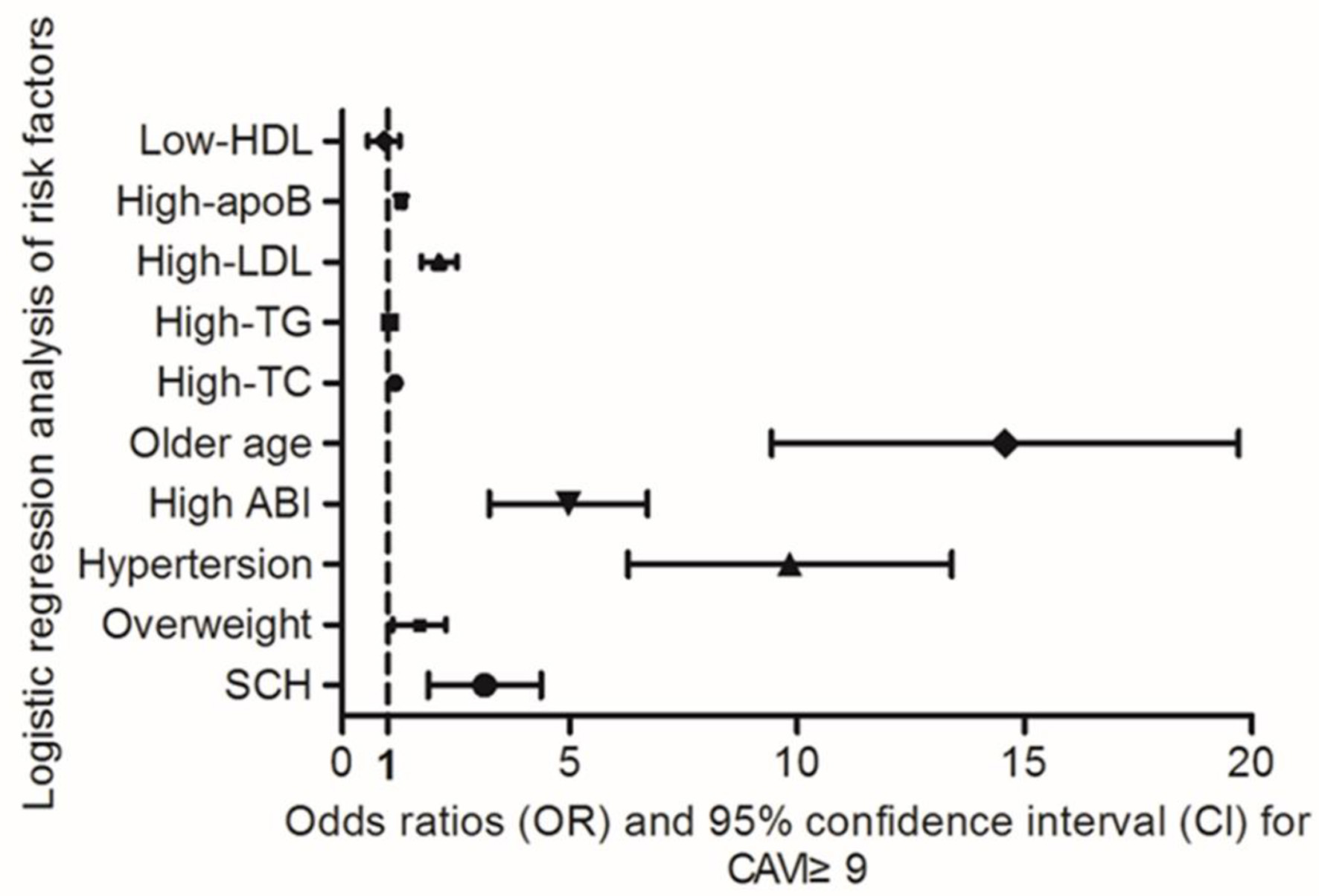
Results: The study included 247 subjects diagnosed with SCH and 1,749 age- and gender-matched control group. Individuals with SCH demonstrated lower basal metabolic rates, higher body weight and fat levels, as well as increased blood lipids and high-sensitivity C-reactive protein (hsCRP) levels. Additionally, individuals with SCH showed elevated CAVI values. CAVI showed a positive correlation with higher levels of thyroid-stimulating hormone (TSH) levels and a negative correlation with free triiodothyronine (FT3) levels, with no statistically significant correlation to free thyroxine (FT4) levels. Logistic regression analysis identified advanced age and hypertension as major independent risk factors associated with elevated CAVI. SCH and overweight were identified as independent risk factors for elevated CAVI. Furthermore, hyperlipidemia characterized by high total cholesterol (TC), triglycerides (TG), low-density lipoprotein (LDL), and apolipoprotein B (apoB) is also correlated with an elevated risk of CAVI.
Conclusions: This study offers epidemiological evidence supporting a correlation between elevated TSH and an increased risk of high CAVI in individuals with SCH. Individuals with SCH and elevated TSH levels appear to be at increased risk of arterial stiffness, suggesting a potential link between thyroid function and early vascular alterations.
Published
Issue
Section
License
Copyright (c) 2026 The authors

This work is licensed under a Creative Commons Attribution 4.0 International License.