

Altered CTLA-4 Expression and Genetic Variation Drive Autoimmune Susceptibility in Turner Syndrome
DOI:
https://doi.org/10.14740/jem1578Keywords:
Autoimmune diseases, Inflammatory diseases, CTLA-4, Gene expression, rs3087243, Immune dysregulation, Turner syndromeAbstract
Background: Patients with Turner syndrome (TS) exhibit an increased susceptibility to autoimmune and chronic inflammatory diseases compared to the general female population. Recent studies have implicated immune regulatory genes, including cytotoxic T-lymphocyte-associated protein 4 (CTLA-4), a key player in immunosuppression, in this predisposition. This study investigated the CTLA-4 rs3087243 (G>A) polymorphism and gene expression profiles in patients with TS to assess their potential association with immunological dysregulation.
Methods: A genetic association study was conducted in 112 patients with TS (with and without autoimmune/inflammatory diseases) and compared to 241 healthy women using TaqMan genotyping. Additionally, CTLA-4 mRNA levels were quantified via quantitative polymerase chain reaction (qPCR) in 15 TS patients and 15 controls, including TS subgroups with (n = 9) and without (n = 10) autoimmune/inflammatory conditions.
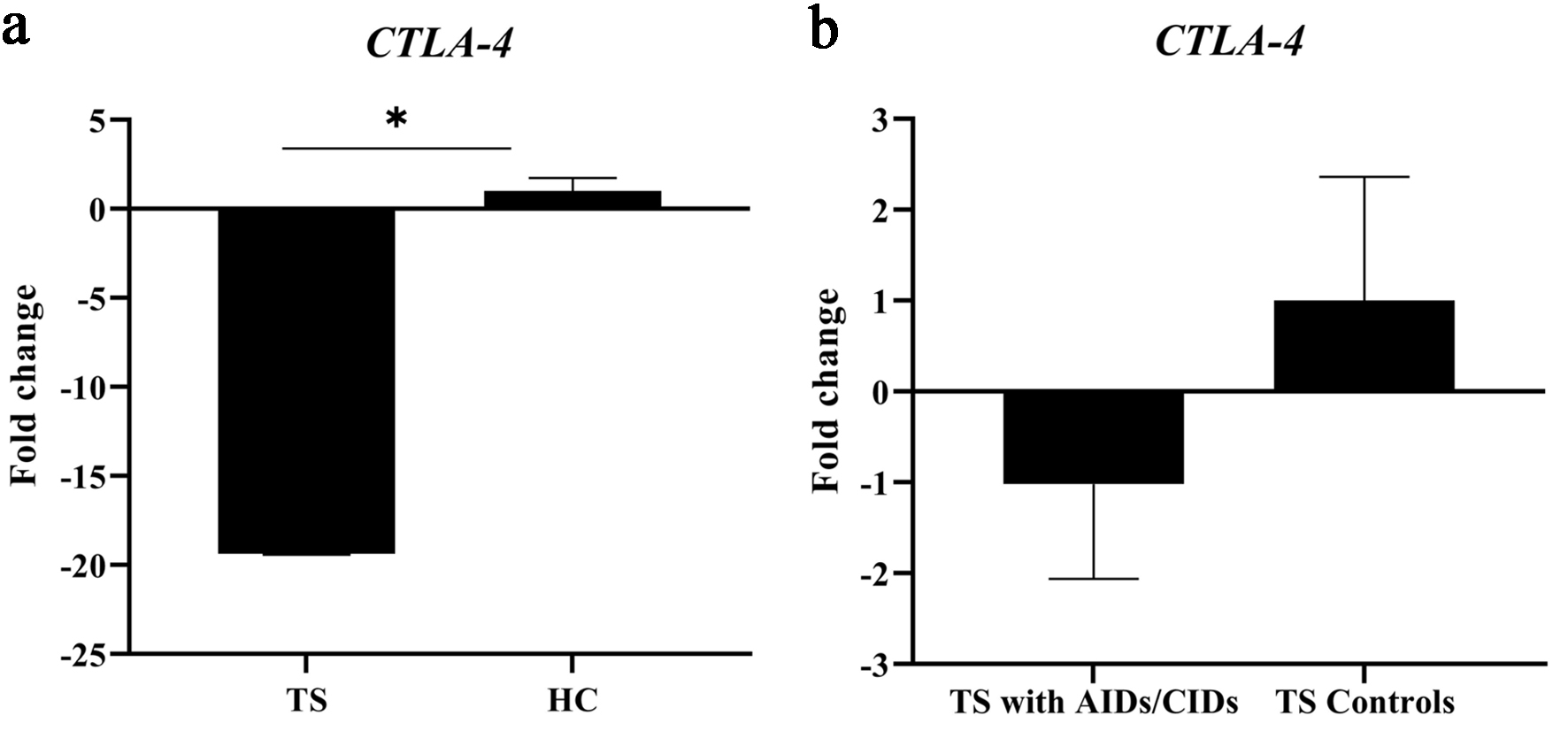
Results: The G allele was more prevalent in TS patients with autoimmune diseases (P = 0.047; odds ratio (OR) = 0.51; 95% confidence interval (CI) = 0.25 - 1.02), while the GA genotype appeared protective in controls (P < 0.001; OR = 0.14; 95% CI = 0.06 - 0.3). No association was found between CT60 and inflammatory diseases in TS. Notably, CTLA-4 expression was significantly downregulated in patients with TS compared to controls (-19.38-fold change; P < 0.001), although no differences were detected between TS subgroups with and without immune-related conditions (P = 0.8413).
Conclusions: These findings highlight a possible role of CTLA-4 in TS-associated immune dysregulation, particularly through reduced expression, which may contribute to altered immune responses. Although the rs3087243 polymorphism showed limited clinical association, its differential distribution in patients with TS versus healthy controls underscores the genetic complexity of immune regulation in TS. Further research is needed to elucidate the mechanistic links between CTLA-4 variants, expression patterns, and autoimmune susceptibility in TS.
Published
Issue
Section
License
Copyright (c) 2025 The authors

This work is licensed under a Creative Commons Attribution-NonCommercial 4.0 International License.