Therapeutic Outcomes of Methimazole in Hyperthyroidism Patients
DOI:
https://doi.org/10.14740/jem1602Keywords:
Hyperthyroidism, Methimazole, Antithyroid drugs, Adverse effects, Thyroid functionAbstract
Background: Hyperthyroidism is a disorder characterized by excessive thyroid hormone production. Methimazole is widely considered the first-line treatment due to its efficacy and favorable safety profile. However, there is limited contemporary local data on its clinical outcomes and adverse effects in Saudi Arabia. The aim of the study was to evaluate the efficacy and adverse effect profile of methimazole in adult patients with hyperthyroidism across varying treatment durations.
Methods: This retrospective case-crossover study was conducted at King Abdullah Specialized Children’s Hospital (KASCH). A total of 277 adult patients diagnosed with hyperthyroidism and treated with methimazole between January 2015, and December 2022 were included. Data were collected through chart review and analyzed using SAS version 9.4. A P value < 0.05 was considered statistically significant.
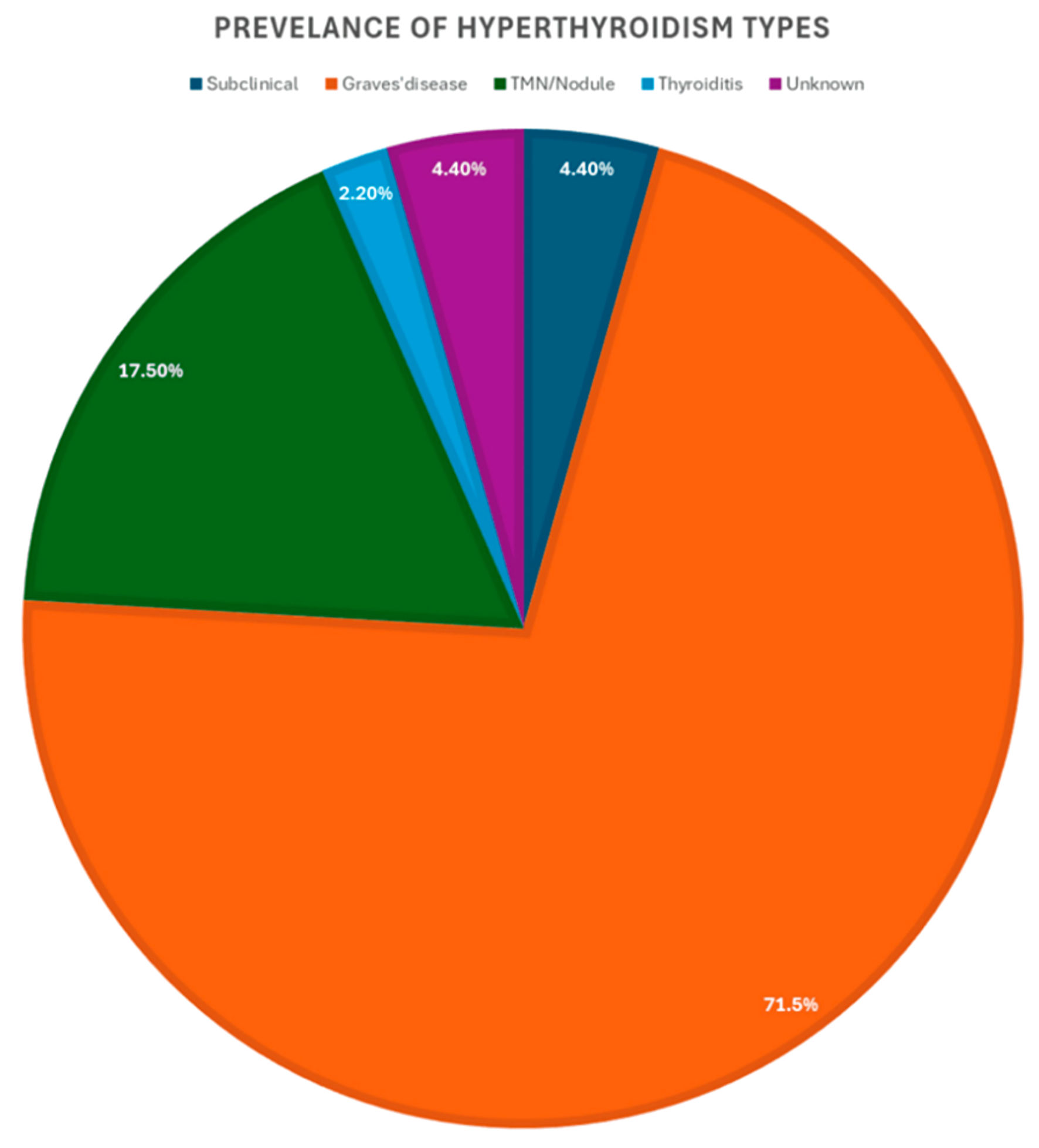
Results: The majority of patients were female (70.4%) and had Graves’ disease (71.5%). Treatment duration ranged from less than 6 months to more than 24 months. Gastrointestinal adverse effects, particularly sore throat, were significantly associated with longer treatment duration (P = 0.0067). Other adverse effects included dermatological reactions (30% rash), musculoskeletal symptoms (18.1% arthralgia), and hematological abnormalities (16.2% leukopenia), none of which showed significant variation across treatment durations. Older age was significantly associated with increased rates of anemia (P = 0.0340) and thrombocytopenia (P = 0.0019). Biochemical response was achieved in the majority of patients, with normalization of thyroid-stimulating hormone (TSH) in 73.7% and thyroxine (T4) in 55.5% of cases; however, a substantial proportion demonstrated low T4 levels post-treatment, suggesting potential overtreatment.
Conclusions: Methimazole is an effective and generally well-tolerated treatment for hyperthyroidism. However, prolonged therapy and older age are associated with an increased risk of adverse effects. These findings highlight the importance of individualized dose titration and regular monitoring to optimize treatment outcomes and minimize complications.
Published
Issue
Section
License
Copyright (c) 2026 The authors

This work is licensed under a Creative Commons Attribution-NonCommercial 4.0 International License.