

Corticotropin-Releasing Hormone Test for Diagnosing Central Adrenal Insufficiency: A Retrospective Cross-Sectional Study
DOI:
https://doi.org/10.14740/jem1650Keywords:
Adrenal insufficiency, Cortisol, Corticotropin-releasing hormone test, Hypothalamus, PituitaryAbstract
Background: The diagnostic cutoff for central adrenal insufficiency (AI) is traditionally set at a peak cortisol level of 18 µg/dL during stimulation tests. However, modern high-specificity cortisol assays typically yield lower values, necessitating a re-evaluation of diagnostic thresholds. This study aimed to determine the optimal cutoff values and to explore a practical diagnostic approach for the corticotropin-releasing hormone (CRH) stimulation test using a contemporary assay system.
Methods: We retrospectively analyzed 83 patients with hypothalamic-pituitary structural lesions who underwent a CRH test between 2016 and 2020. Patients were classified into an adrenal sufficiency group (AS, n = 44) or an AI group (n = 39) based on comprehensive clinical assessment, including symptoms and long-term follow-up. Receiver operating characteristic (ROC) curve analysis was performed to identify diagnostic thresholds.
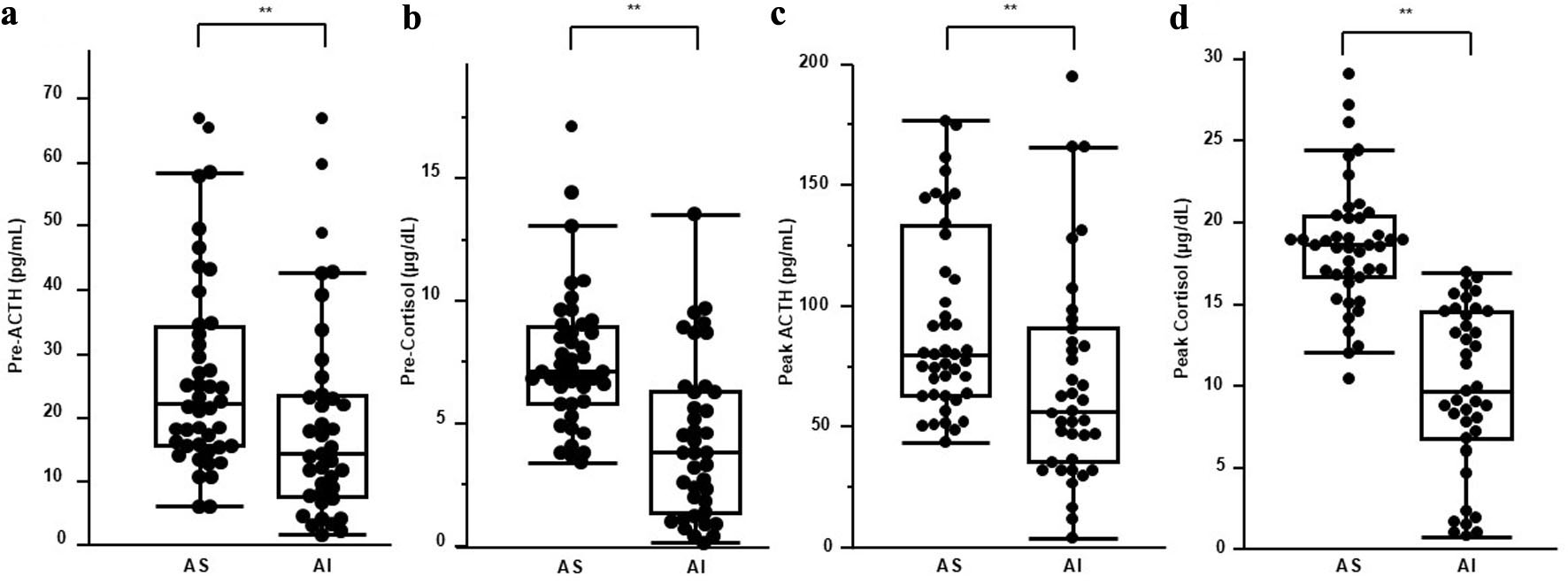
Results: Basal and peak cortisol levels were significantly lower in the AI group than in the AS group (P < 0.05). ROC analysis for diagnosing AI showed that peak serum cortisol had the highest diagnostic performance (area under the curve, 0.94). The optimal peak cortisol cutoff value was 16.3 µg/dL (sensitivity: 94.9%, specificity: 79.6%). A peak cortisol threshold of 17.0 µg/dL achieved 100% sensitivity, whereas a basal cortisol level of 3.3 µg/dL, a peak cortisol threshold of 10.0 µg/dL, and a peak adrenocorticotropic hormone (ACTH) level of 36.5 pg/mL provided 100% specificity. Notably, peak cortisol values in the 10.1–16.9 µg/dL range showed significant overlap between the groups. Delayed ACTH peaks (≥ 60 min) were more frequent in the AI group but lacked definitive diagnostic specificity.
Conclusions: By integrating our findings with contemporary literature using modern high-specificity assays, we propose a practical step-by-step clinical approach that sequentially incorporates a basal cortisol rule-in threshold (≤ 3.0 µg/dL), peak ACTH threshold (≤ 35 pg/mL), and a screening threshold for peak cortisol (17.0 µg/dL). Clinical judgment remains essential for patients with peak cortisol values between 10.1 and 16.9 µg/dL, for whom diagnosis and management should be individualized based on clinical symptoms and biochemical findings rather than a single binary threshold.
Published
Issue
Section
License
Copyright (c) 2026 The authors

This work is licensed under a Creative Commons Attribution 4.0 International License.