

Common Bean (Phaseolus vulgaris) Husk Peptides Mitigate Cytokine Dysregulation and Inflammation in Obese Rats
DOI:
https://doi.org/10.14740/jem1627Keywords:
Phaseolus vulgaris, Obesity, Peptides, Low-grade inflammation, CytokineAbstract
Background: Low-grade inflammation is believed to be an integral component and key marker of obesity and metabolic syndrome. Among various plant sources, the common bean (Phaseolus vulgaris) is a promising source of bioactive peptides, which could be effective in mitigating the negative effects of obesity.
Methods: Using an enzyme-linked immunosorbent assay procedure, we evaluated the relative levels of hypoxia inducible factor 1 subunit alpha (HIF-1α), nuclear factor kappa-light-chain-enhancer of activated B cells (NF-κB), interleukin 6 (IL-6), interleukin 8 (IL-8), interleukin 1 beta (IL-1β), tumor necrosis factor alpha (TNF-α), and resistin in the serum, visceral adipose tissue, liver, and kidneys of obese rats that either consumed P. vulgaris husk-derived peptides as a dietary supplement or did not.
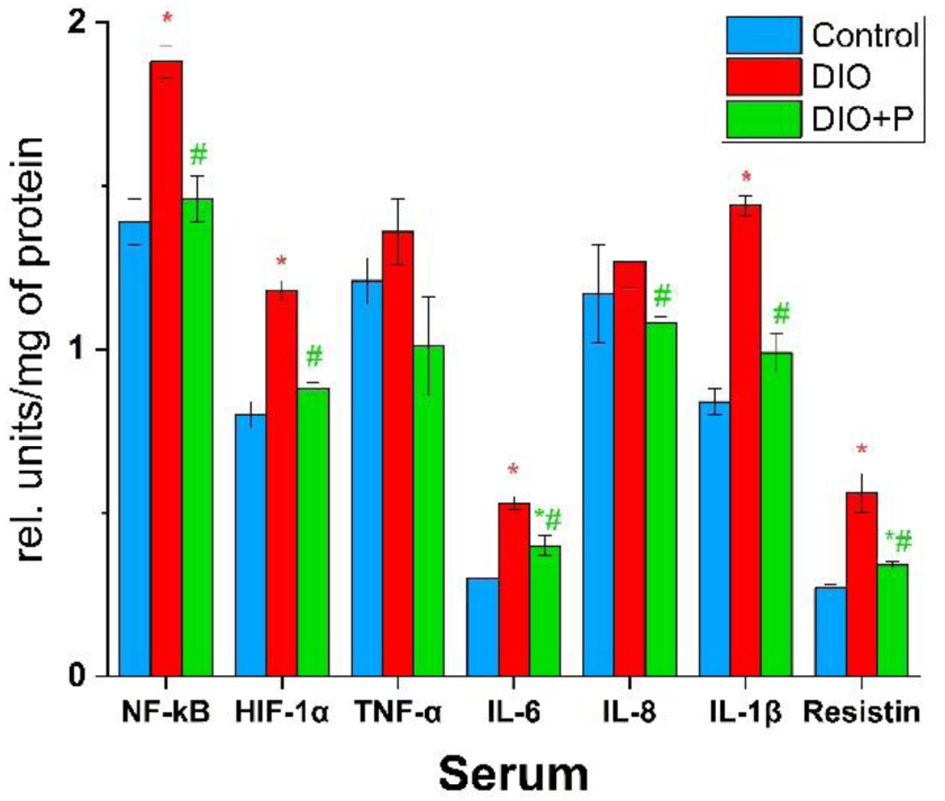
Results: In the serum of obese rats, the results revealed increased levels of all assessed cytokines (except IL-8 and TNF-α), mainly resistin, IL-6, and IL-1β. In adipose tissue, the main changes were observed in the levels of resistin, IL-6, and TNF-α. In the liver and kidneys, alterations were primarily noted in the levels of HIF-1α and IL-8.
Conclusions: These cytokine profile patterns are indicative of the development of low-grade inflammation, insulin resistance, metabolic dysfunction-associated steatotic liver disease, and chronic kidney disease, which are inherent in obesity. At the same time, in animals that consumed peptides, cytokine levels were slightly above or at control levels, indicating the effectiveness of common bean husk peptides against obesity-induced low-grade inflammation.
Published
Issue
Section
License
Copyright (c) 2026 The authors

This work is licensed under a Creative Commons Attribution 4.0 International License.