

Weight Loss Intervention and Early Biomarker Search in Middle-Aged and Elderly Women: Early Signs of Body Composition Changes Indicated by Blood Cholinesterase and Cystatin C
DOI:
https://doi.org/10.14740/jem1628Keywords:
Cholinesterase, Cystatin C, Obesity, Early biomarker of body composition changeAbstract
Background: This study aimed to comprehensively examine the effects of participation in a dietary intervention program on body composition and multiple hematological and biochemical markers in middle-aged and older women, particularly identifying the biomarkers that fluctuate in conjunction with changes in body composition.
Methods: A 6-month dietary intervention program was conducted involving 33 middle-aged and older women (mean age 60.9 ± 11.0 years, mean body mass index (BMI) 24.8 ± 3.2 kg/m2). The body composition and nonfasting blood parameters were measured before and after the intervention. In this study, pre- or post-intervention changes and correlated changes in body composition were compared with blood parameters.
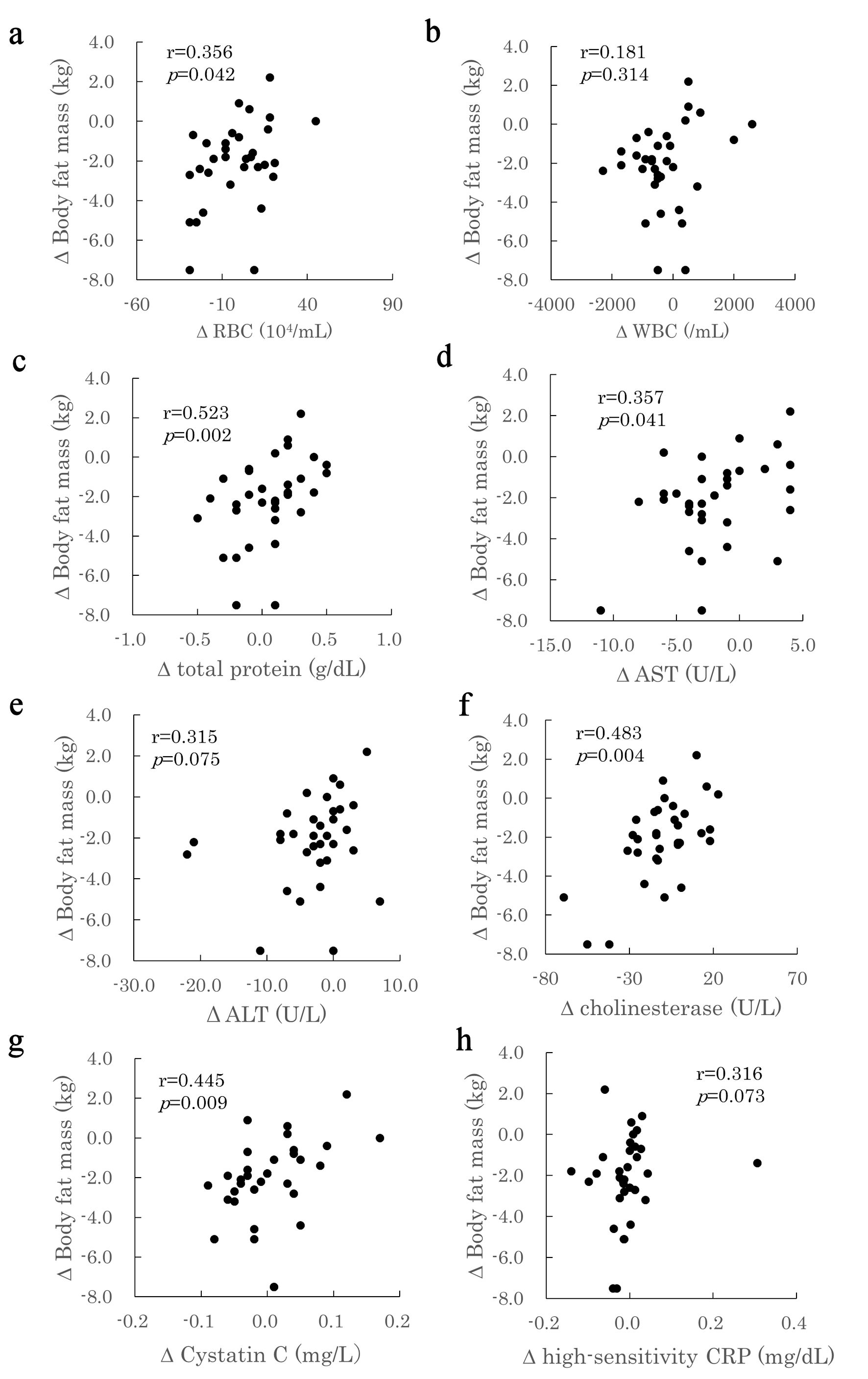
Results: Participation in the dietary program led to significant reductions in body weight, BMI, body fat mass, body fat percentage, and waist circumference. The blood parameters showing significant decreases were white blood cell count, red blood cell count, aspartate aminotransferase, alanine aminotransferase, and cholinesterase. The change in body fat mass (Δbody fat mass) was positively correlated with the change in cholinesterase (Δcholinesterase, r = 0.483). Multiple regression analysis identified Δcholinesterase (β = 0.505) as an independent explanatory variable for Δbody fat mass. In addition, Δcystatin C (β = 0.500) was considered an independent explanatory variable for the change in waist circumference (Δwaist circumference).
Conclusions: The findings of this study indicate that cholinesterase and cystatin C may capture fluctuations in body composition earlier than conventional inflammatory markers. Consequently, they may be useful, simple, and objective indicators for evaluating the effectiveness of lifestyle interventions.
Published
Issue
Section
License
Copyright (c) 2026 The authors

This work is licensed under a Creative Commons Attribution 4.0 International License.