

Association Between Mortality and Weight Loss in Critical Patients: A Propensity Matching Study
DOI:
https://doi.org/10.14740/jem1638Keywords:
Weight loss, Mortality, Intensive care unit, Propensity score matchingAbstract
Background: Malnutrition is prevalent among critically ill patients and significantly impacts clinical outcomes. This study aimed to investigate the association between weight loss (a proxy for nutritional depletion) and mortality in intensive care unit (ICU) patients.
Methods: A retrospective cohort analysis was conducted using data from 29,217 ICU patients in the Medical Information Mart for Intensive Care III (MIMIC-III) database. Patients were stratified into weight-loss and non-weight-loss groups. Propensity score matching (PSM) was employed to balance baseline characteristics. Multivariable logistic and Cox regression analyses were performed to assess associations between weight loss and outcomes.
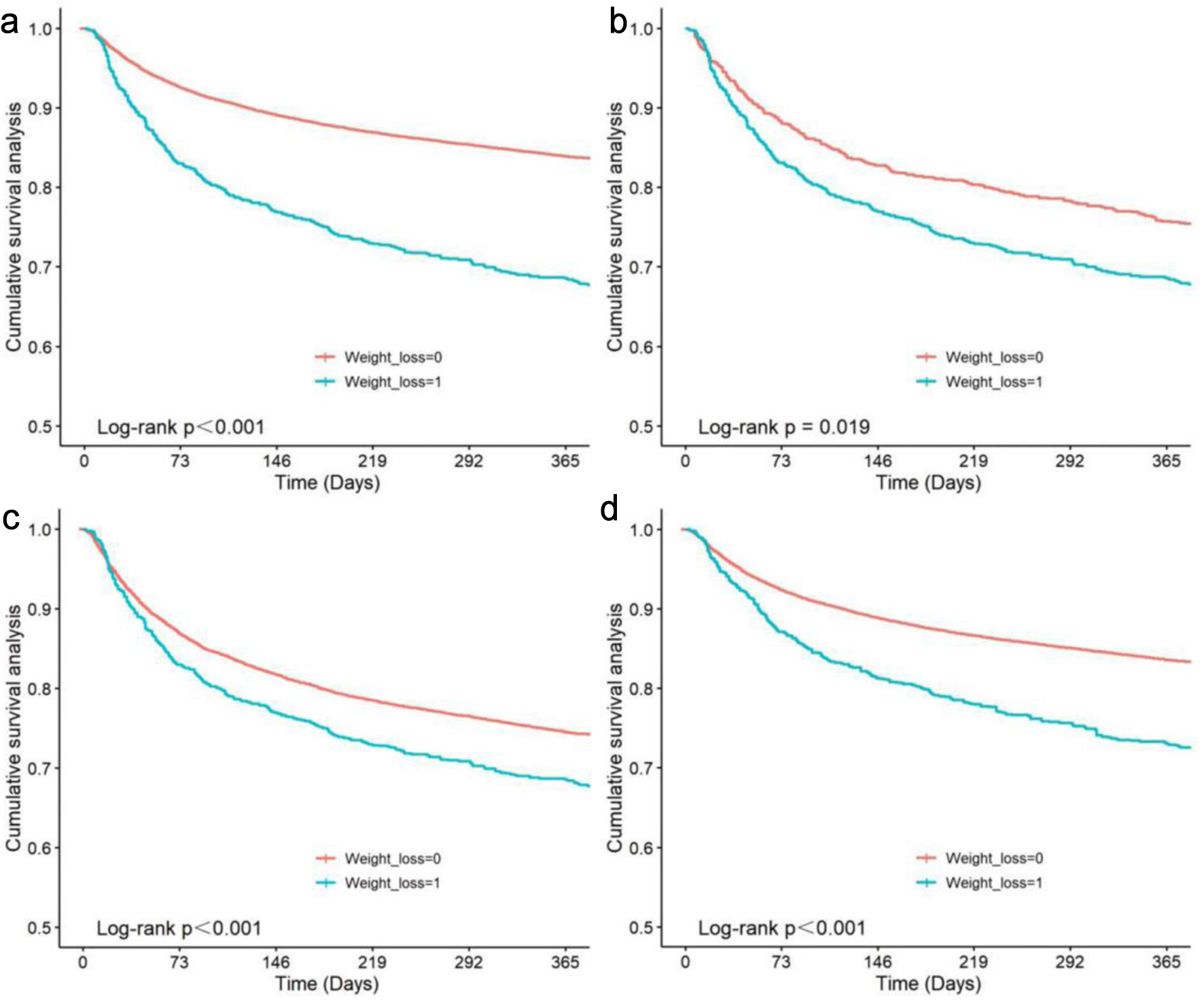
Results: Weight-loss patients exhibited significantly higher short- and long-term mortality rates compared to non-weight-loss patients (90-day: 18.9% vs. 13.6%, P = 0.002; 180-day: 21.8% vs. 16.9%, P = 0.002, 365-day: 31.3% vs. 24.2%, P = 0.001). Weight loss was also associated with prolonged mechanical ventilation (27.1% vs. 14.2%, P < 0.001), renal replacement therapy (4.1% vs. 0.9%, P < 0.001), and extended ICU/hospital stays. Adjusted regression models confirmed weight loss as an independent risk factor for short-term and long-term mortality.
Conclusions: Weight loss is significantly associated with mortality and adverse outcomes in critically ill patients. Early nutritional assessment and intervention are essential to improve prognosis.
Published
Issue
Section
License
Copyright (c) 2026 The authors

This work is licensed under a Creative Commons Attribution 4.0 International License.